
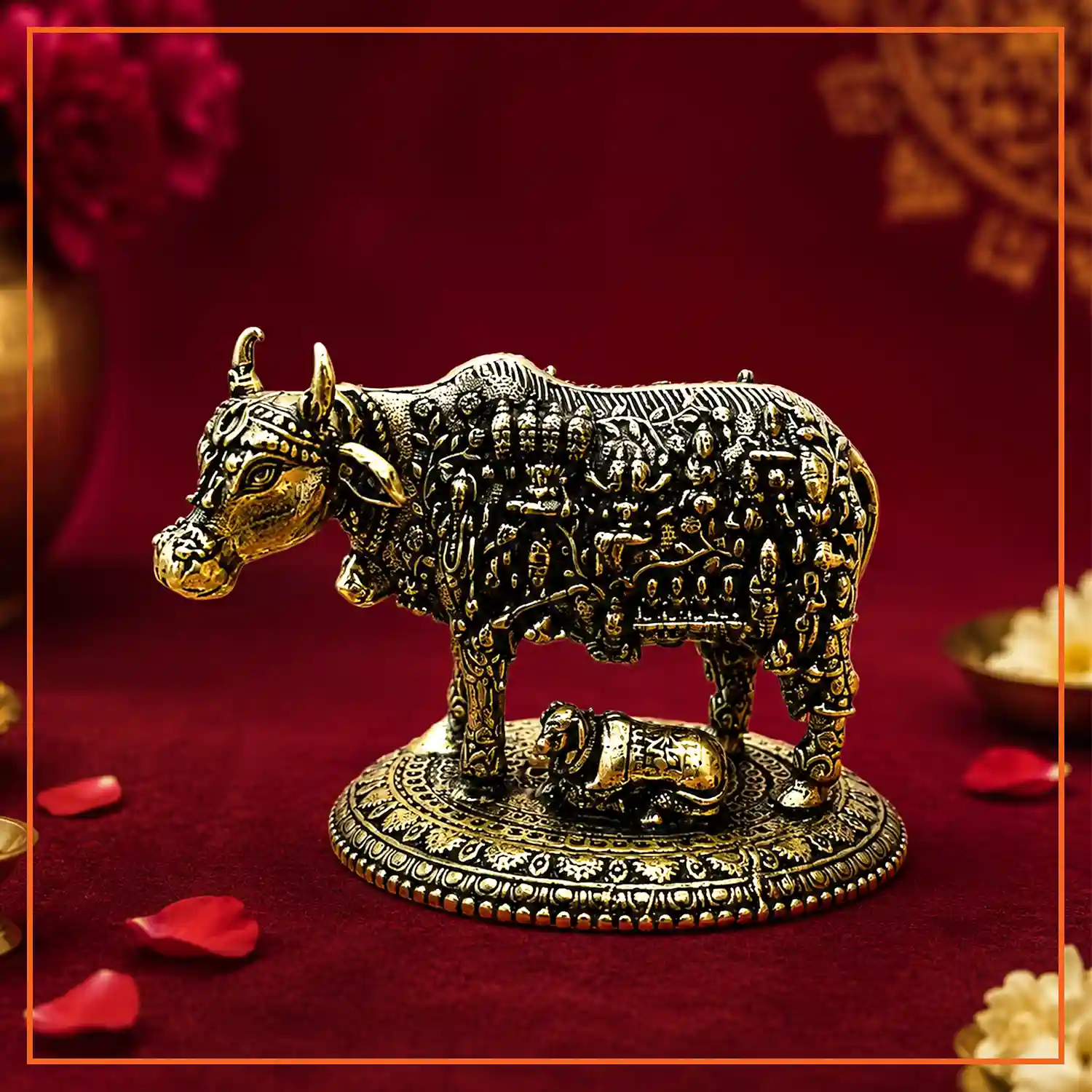
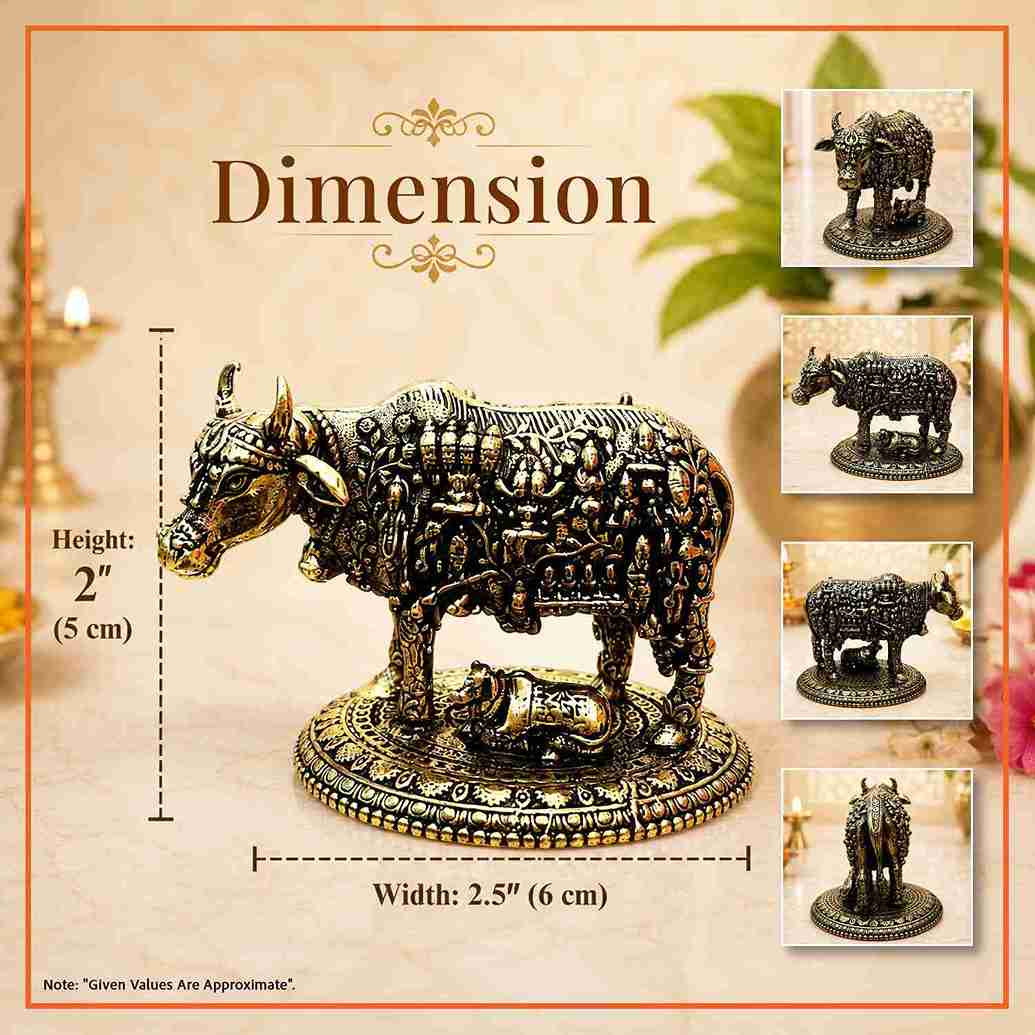
Kamadhenu Cow Superfine Brass Idol with All Gods for Prosperity & Gratitude | 5 cm
1 Piece
₹999
MRP 1499
Discount: 33% OFF 33% OFF Availablity: Out of Stock
- Kamdhenu, the celestial wish-fulfilling cow, is revered in Hindu tradition as the eternal source of prosperity, nourishment and divine grace. Worshipped as the mother of all cows, she symbolizes abundance, purity, compassion and the blessings of all deities, inspiring peace, harmony and spiritual well-being in every home.
- Kamadhenu Cow Katha: The sacred Kamadhenu, also known as Surabhi, is the divine wish-fulfilling cow who emerged during the great churning of the cosmic ocean (Samudra Manthan) and is revered in Hindu tradition as the Mother of all cows and a living embodiment of Goddess Lakshmi. All Gods and Goddesses reside within her holy body — the four Vedas form her legs, the Trinity of Brahma, Vishnu, and Shiva dwell in her horns, the Sun and Moon shine through her eyes, and the deities Agni and Vayu rest upon her shoulders, making her a complete temple in herself. According to the ancient Puranas, she resided in the hermitages of the great sages Vasishtha and Jamadagni, providing sacred milk, ghee, and all materials for Vedic rituals, while also creating powerful armies to protect Dharma and her devoted masters from harm.
|
|
|---|---|
|
|
|
|
|
|
|
|
|
|
|
|
|
|
- Kamdhenu, also known as Surabhi, is the divine cow described in Hindu scriptures as the wish-fulfilling mother of all cows. According to the Puranas, she emerged during the Samudra Manthan (Churning of the Ocean) and is revered as a symbol of limitless abundance, selfless nourishment and sacred motherhood.
- Hindu tradition regards Kamdhenu as the abode of all gods and goddesses. Her worship signifies gratitude towards nature, respect for all living beings and the belief that prosperity flourishes where compassion, righteousness and devotion reside.
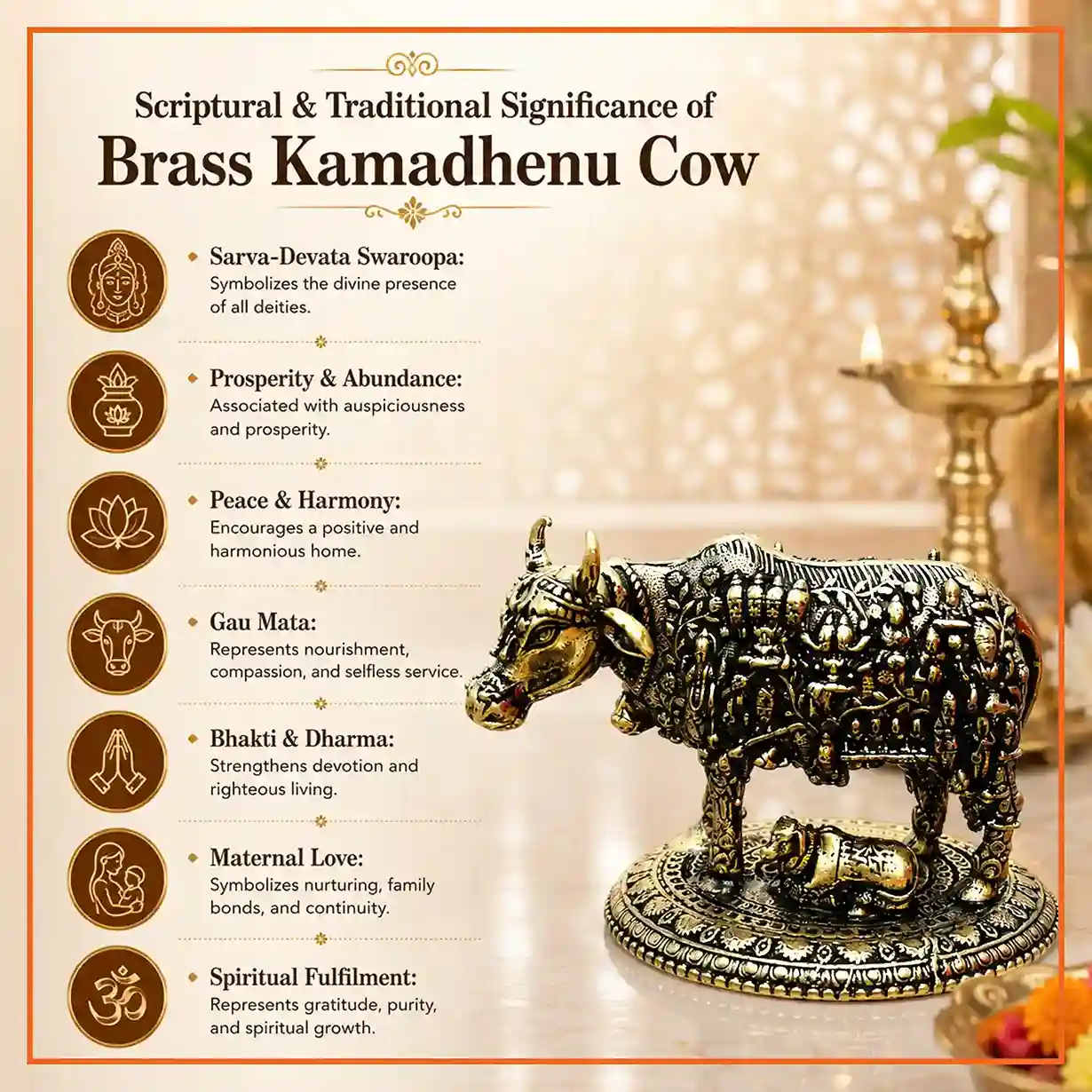
- The intricate structure of Kamdhenu (Surabhi) reflects profound spiritual symbolism in Hindu tradition. Revered as Sarva-Devata Swaroopa, Kamdhenu is believed to embody the presence of all 33 principal Hindu deities, making Her worship a symbolic offering to the entire divine pantheon. As Gau Mata, She represents selfless service, purity, nourishment and unconditional maternal love, sustaining life through Her sacred gifts.
- The calf resting beneath Her signifies family harmony, continuity of generations, prosperity and the nurturing bond between mother and child. Known as the divine wish-fulfilling cow, Kamdhenu also symbolizes abundance, auspiciousness and spiritual fulfilment, reminding devotees that true prosperity arises through righteousness, gratitude and devotion.
Traditionally, worshipping Kamadhenu Cow with Calf is associated with:
- Honouring the divine presence of all Gods and Goddesses (Sarva-Devata Swaroopa) in one sacred form.
- Seeking prosperity, abundance, auspiciousness and righteous fulfilment through Kamadhenu's blessings.
- Inviting peace, family harmony and positive spiritual energy into the home.
- Expressing gratitude for nourishment, compassion, selfless service and the sacred role of Gau Mata.
- Strengthening devotion (Bhakti), Dharma and reverence for Vedic traditions.
- Celebrating maternal love, continuity of generations and the nurturing bond between mother and child.
- For daily worship or spiritual décor, place the statue in a clean and dedicated home temple or an auspicious location within your home.
- • Place the statue on a clean, elevated platform.
- • Maintain a neat and peaceful surrounding.
- • Avoid placing it directly on the floor or in cluttered spaces.
- • Offer flowers or light a diya during prayers according to your family tradition.
- Placement traditions may vary according to regional customs, family practices and the guidance of one's spiritual teacher.
- • Place the statue in a clean and sacred location.
- • Dust regularly using a soft, dry cloth.
- • Avoid abrasive cleaners or harsh chemicals.
- • Handle with clean hands while worshipping or relocating.
- • Keep the surrounding area clean and spiritually uplifting.
- 1. Is this statue suitable for daily worship?
- Yes. This Kamdhenu Cow and Calf Statue is ideal for daily prayers, home temples and devotional spaces.
- 2. Why is the calf depicted with Kamdhenu?
- The calf represents motherly affection, nourishment, family prosperity and the continuity of divine blessings, making this form especially auspicious in Hindu tradition.
- 3. On which occasions is Kamdhenu worship considered especially auspicious?
- Kamdhenu is worshipped throughout the year. Govatsa Dwadashi, Gopashtami, Diwali, and other auspicious pujasare traditionally considered especially significant for offering prayers.
- 4. Can this statue be gifted on auspicious occasions?
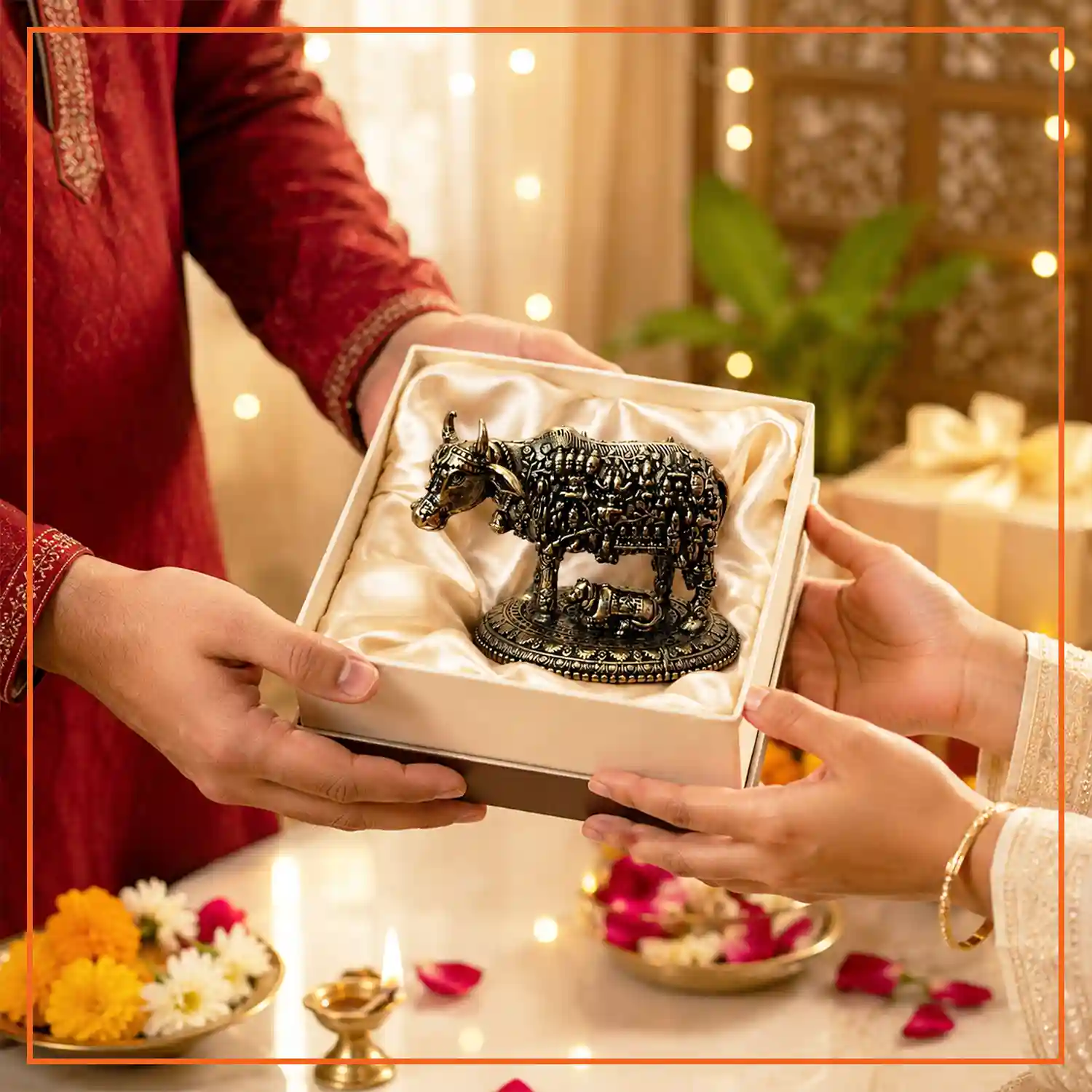
- Yes. It is a thoughtful spiritual gift for housewarming ceremonies, weddings, festivals, new business inaugurations, birthdays and other devotional occasions, symbolizing prosperity, harmony and divine blessings.
- Kamadhenu Idol with 33 Koti Deities | Sarva Devata Kamadhenu Idol | Kamadhenu Cow with All Gods Idol | Kamadhenu with 33 Crore Deities Idol | Divine Kamadhenu Surabhi Idol | Gau Mata with All Gods Idol | Kamadhenu Cow with Calf Idol | Kamadhenu Sarva Devata Swaroopa Idol | Wish-Fulfilling Kamadhenu Cow Idol | Kamadhenu Brass Murti | Surabhi Cow Idol | Sacred Kamadhenu Statue | Kamadhenu for Home Temple | Gau Mata Murti | Kamadhenu with Divine Pantheon Idol
- The spiritual significance, traditional benefits and placement guidance provided above are based on Hindu scriptures, devotional literature, Vastu traditions and long-standing worship practices. Regional customs, sampradayas (traditions) and family practices may vary. This information is intended to support spiritual understanding and devotional practice and should not be interpreted as a guarantee of specific outcomes.
_11zon.webp)
_11zon.webp)
_11zon.webp)
_11zon.webp)
_11zon.webp)
_11zon (1).webp)
_11zon.webp)
_11zon.webp)
_11zon.webp)
_11zon.webp)
_11zon.webp)
_11zon.webp)
_11zon.webp)
_11zon (2).webp)
_11zon.webp)
_11zon.webp)
_11zon.webp)
_11zon.webp)
_11zon.webp)
_11zon.webp)
_11zon.webp)
_11zon.webp)
_11zon.webp)
_11zon.webp)
_11zon.webp)
_11zon.webp)
_11zon (1).webp)
_11zon.webp)
_11zon.webp)